
How to Market a Performing Arts Business: A Practical Guide for Dance Studios, Theaters, Music Schools & More

Six: The Musical cast member Taylor Pearlstein teaches a musical theater intensive for Beyond Broadway Productions
Marketing a performing arts business is a little different from marketing almost anything else.
You’re not just selling dance classes, music lessons, theater tickets or summer camps. You’re selling an experience.
You’re selling the feeling a parent gets when they see their child light up on stage. You’re selling confidence, creativity, friendships, community and the chance to be part of something meaningful.
And that can be surprisingly hard to put into a Facebook post or a homepage headline.
Whether you run a dance studio, children’s theater, music school, gymnastics program, cheer gym, competition, convention or another performing arts business, good marketing comes down to one thing:
Helping people understand what makes your organization special — and giving them a reason to take the next step.
Here’s how to do that without feeling like you have to become a full-time marketer in the process.
Start With a Brand People Can Recognize
A strong brand is about much more than having a nice logo.
Your brand is the overall feeling people get every time they interact with your business.
It’s your website. Your social media. Your photography. Your emails. Your signs in the lobby. Your recital program. Your registration graphics. Even the way you talk about your programs.
When all of those things feel connected, your business starts to look established, professional and trustworthy.
That doesn’t mean every Instagram post needs to look identical.
It simply means someone should be able to see your content and think, Oh, that’s them.
Consistent colors, fonts, imagery and messaging go a long way. But just as important is having a clear personality.
Are you polished and professional? Warm and welcoming? Energetic and fun? Artistic and sophisticated?
You don’t have to sound like every other performing arts organization in your area. In fact, you probably shouldn’t.
The strongest brands feel like a real extension of the people behind them.
Make Your Website Answer the Questions People Actually Have
It’s easy to think of your website as an online brochure.
But for a potential customer, it’s often much more than that.
It may be the first real interaction they have with your business.
A parent might discover you through Google at 10:30 at night after finally getting the kids to bed. Someone may hear your name from a friend and look you up before ever calling. A family might compare three different studios or schools without contacting any of them.
Your website needs to do some of the work for you.
Make it easy for people to figure out:
Who your programs are for
What you offer
Where you’re located
What makes you different
How to register, enroll, audition or buy tickets
What the experience actually looks and feels like
That last one is especially important.
Performing arts businesses are incredibly visual, yet many websites still rely heavily on text.
Show real students. Real performances. Real classrooms. Real rehearsals. Real instructors.
People want to picture themselves — or their child — there.
And don’t make visitors hunt for the next step.
If registration is open, say so.
If auditions are coming up, make them easy to find.
If you want people to schedule a trial class, put that button somewhere obvious.
Good marketing should make taking action feel easy.
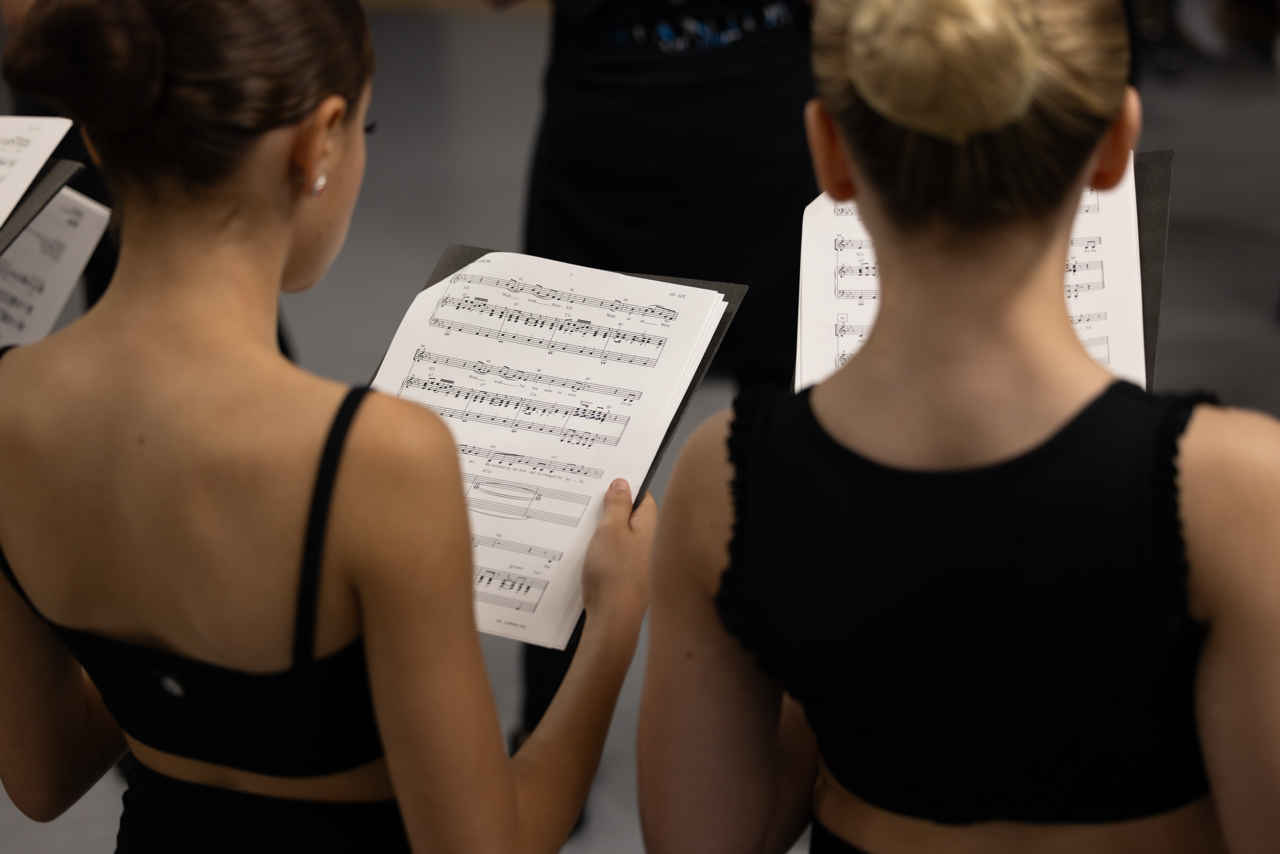
Musical theater intensive students practice during a Beyond Broadway Productions workshop
Show People What It Feels Like to Be Part of Your Community
One of the biggest mistakes performing arts businesses make on social media is treating every post like an advertisement.
“Register now.”
“Tickets on sale.”
“Only three spots left.”
“Don’t forget about summer camp.”
Those posts have a place.
But if every post asks someone to buy something, people eventually stop paying attention.
Social media is much more effective when it lets people experience your organization before they ever walk through the door.
Show the moments in between the big moments.
The student finally getting a difficult step.
The cast laughing backstage.
The instructor helping a nervous beginner.
The orchestra warming up.
The little kid who came to class dressed like it was opening night on Broadway.
Those moments tell your story far better than another registration graphic ever could.
People want to know what it feels like to belong there.
That’s especially true for parents.
They’re not only asking, Will my child learn something?
They’re also wondering:
Will my child be happy here?
Will they be welcomed?
Will the teachers know their name?
Will they make friends?
Will this be a positive part of their life?
Your content can answer those questions.
If social media is where your marketing tends to get stuck, we put together a more detailed guide on how to market a dance studio on social media.”
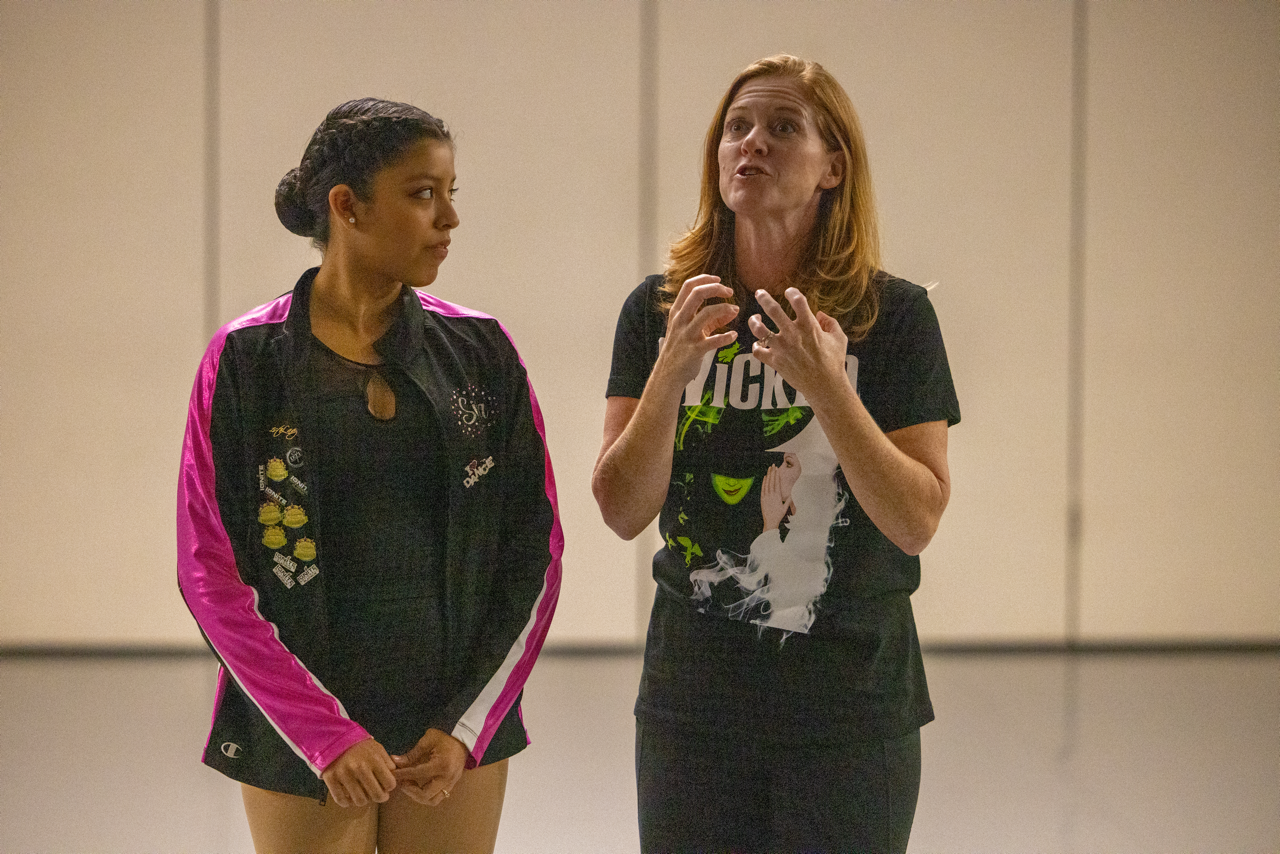
Wicked cast member Lindsay Northen Bradshaw teaches students how to ace a professional audition during a Beyond Broadway Productions workshop.
Build Your Marketing Around the Calendar You Already Have
Here’s some good news:
You probably don’t need to invent nearly as much content as you think you do.
Most performing arts organizations already have a built-in marketing calendar.
Think about everything that happens during your year:
Registration.
Auditions.
First week of classes.
Rehearsals.
Costume fittings.
Competitions.
Tech week.
Performances.
Recitals.
Summer programs.
Camps.
Workshops.
Open houses.
Graduating seniors.
New faculty.
Holiday programs.
Community performances.
Each of those moments can become days — or sometimes weeks — of useful content.
Instead of sitting down on Monday morning thinking, What in the world are we supposed to post this week?, start with what’s already happening inside your organization.
Then document it.
One rehearsal could give you:
A behind-the-scenes Reel.
A student quote.
A photo carousel.
An instructor spotlight.
A countdown to opening night.
A Story asking followers what song they’re most excited to see.
A short video explaining how the production comes together.
Suddenly, one event becomes an entire batch of content.
That’s a much more sustainable way to market.
If creating that calendar every month is the part that slows you down, Dance Content Club was designed to take much of that planning off your plate.
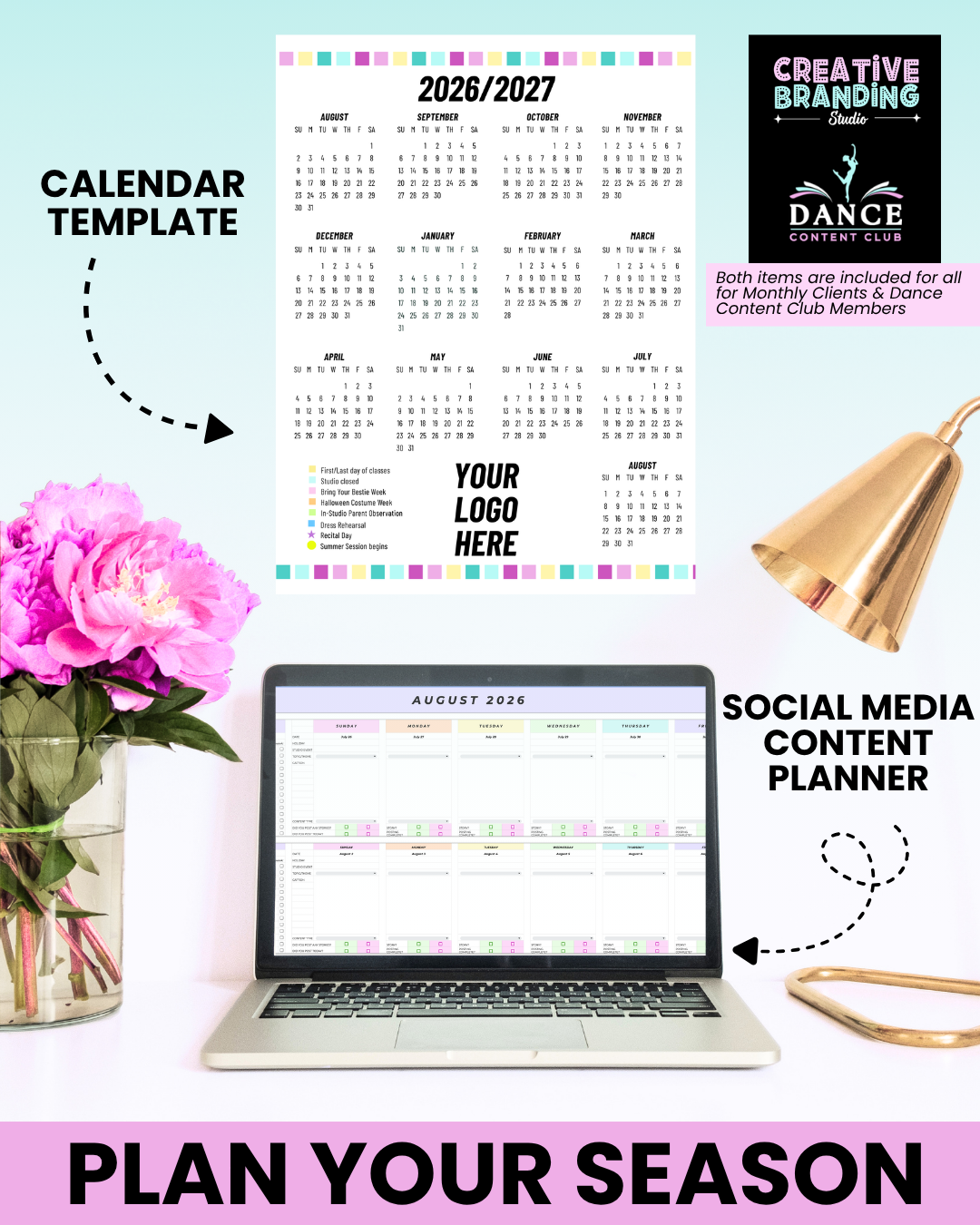
Creative Branding Studio social media content planner, which is included for all members in the Dance Content Club or sold separately in the Template Shop.
Talk to the Person Making the Decision
This matters especially if you work with children.
Your student may be the one excited about dance, theater, music or gymnastics.
But very often, the parent is the person researching, comparing, registering and paying.
Your marketing should speak to both.
Students might respond to:
Performances
Friends
Fun
Costumes
Music
Challenges
Accomplishments
Parents may be looking for:
Qualified instructors
Clear communication
A positive environment
Age-appropriate programs
Convenient schedules
Progress and development
Safety
Value
The best marketing blends the two.
Instead of simply posting:
“Now enrolling for fall classes!”
You might say:
“Looking for an after-school activity that gives your child something to look forward to every week? Fall registration is now open.”
Same promotion.
Very different feeling.
One announces something.
The other speaks to an actual person.
Don’t Only Show Your Best Performers
It can be tempting to fill your marketing with your most advanced students.
They’re impressive.
They look great in photos.
They show what’s possible.
And you should absolutely celebrate them.
But if every piece of content features an elite performer doing something a beginner could never imagine doing, you may unintentionally make your organization feel intimidating.
A parent looking for their six-year-old’s first dance class may not need to see your highest-level competition team.
They need to see another six-year-old smiling in class.
A teenager considering theater for the first time wants to know beginners are welcome.
Someone thinking about taking music lessons wants reassurance that they don’t need to already be good.
Show growth.
Show beginners.
Show students learning.
Show different ages and ability levels.
Show the journey — not just the finished product.
That helps people see themselves in your programs.
Use Social Media for More Than Announcements
A healthy content mix usually includes several different kinds of posts.
You might share:
Educational content
Give parents useful information. Explain how to choose the right class, what to expect at an audition or how students benefit from performing arts education.
Behind-the-scenes content
Rehearsals, backstage moments, set construction, costume fittings, teacher preparation and everyday classroom moments.
Community content
Student accomplishments, birthdays, anniversaries, staff introductions and alumni updates.
Helpful reminders
Registration deadlines, performance dates, schedule changes and upcoming events.
Promotional content
Classes, camps, tickets, workshops and new programs.
Personality
Sometimes the posts that perform best are simply the ones that remind people there are real humans behind the business.
Your social feed doesn’t need to look like a perfectly curated magazine.
It needs to feel alive.
Email Still Matters
Social media gets a lot of attention, but email remains one of the most useful marketing tools a performing arts business has.
Why?
Because you own the relationship.
Instagram can change its algorithm tomorrow.
Facebook can decide fewer people should see your posts.
TikTok trends can disappear in a week.
But your email list belongs to you.
Use it.
That doesn’t mean sending five emails every week.
It means staying in touch consistently enough that people don’t forget about you.
A good email might include:
Upcoming registration
New programs
Performance information
Student stories
Useful resources
Summer camp announcements
Behind-the-scenes updates
Important dates
Your email doesn’t have to be complicated.
In fact, simpler is often better.
Write like a person.
Share something useful.
Give readers one clear next step.
Stop Reinventing Your Marketing Every Week
One of the biggest reasons marketing becomes overwhelming is that businesses treat every post, email and campaign like it has to start from scratch.
It doesn’t.
You can create systems.
Build reusable templates.
Keep a folder of good photos.
Create a list of content categories.
Plan around the school year.
Batch your content.
Reuse ideas that worked.
Turn one piece of content into several.
For example, a blog post like this one can become:
Five Instagram posts
A Reel
An email
A carousel
Several Stories
A downloadable checklist
That’s not cheating.
That’s good marketing.
Your audience probably isn’t seeing everything you publish anyway, and repetition helps reinforce your message.
Make Marketing a Habit, Not an Emergency
Many performing arts businesses market hardest when they desperately need enrollment.
Registration is slow, so suddenly everyone is posting every day.
Then registration fills up and marketing disappears for three months.
The problem is that good marketing works best before you desperately need it.
You want families seeing your students, your teachers, your performances and your community long before they’re ready to enroll.
That familiarity matters.
When registration opens, they may already know who you are.
They may already follow you.
They may already trust you.
Marketing becomes much easier when you’re not trying to introduce yourself and make the sale at the exact same moment.
Consistency doesn’t mean posting constantly.
It means showing up regularly.
Know When It’s Time to Get Help
There’s a point where DIY marketing works perfectly well.
And there’s also a point where it starts taking time away from actually running your business.
Maybe you have plenty of ideas but no time to create them.
Maybe your staff is posting whenever someone remembers.
Maybe your branding has slowly become inconsistent.
Maybe your website no longer reflects the organization you’ve grown into.
Or maybe marketing is simply one more thing on an already very long list.
Getting help doesn’t necessarily mean handing everything over.
Sometimes you just need a system.
Sometimes you need better templates.
Sometimes you need someone to create your content.
And sometimes you need a full marketing strategy.
The goal isn’t to market more for the sake of marketing more.
It’s to create a system that helps the right people discover you, understand you and ultimately choose you.
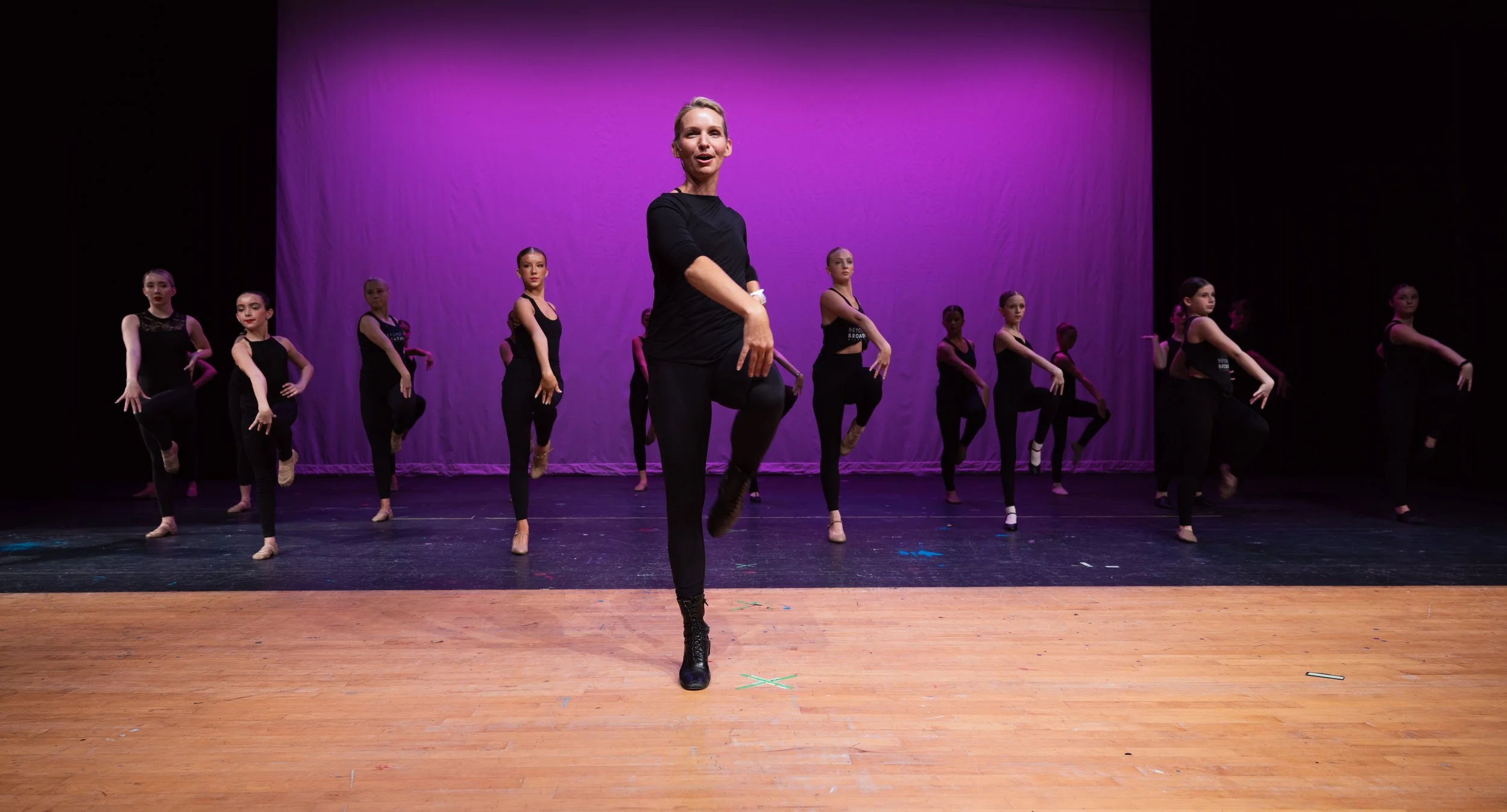
Former New York City Rockette Christina Hedrick teaches a precision dance workshop for Beyond Broadway Productions
Your Best Marketing Is Usually Already Happening
If you take one thing away from this article, let it be this:
Your best marketing probably isn’t something you need to invent.
It’s already happening inside your business every day.
It’s the student who finally gets the choreography.
The teacher who stays five minutes after class to help.
The parent who tells you their child has gained confidence.
The audience applauding at the end of the show.
The friendships.
The rehearsals.
The small victories nobody outside your organization usually gets to see.
Those are the stories people connect with.
Your job is simply to start sharing them.
And when you do that consistently — with strong branding, a clear website and a thoughtful marketing strategy behind it — marketing starts to feel a lot less like advertising.
It starts to feel like telling people why the work you’re already doing matters.
Need help creating a marketing system that actually fits your performing arts business? Explore our marketing and branding services.